Reg No. - CHHBIL/2010/41479ISSN - 2582-919X

Healthy Human Capital as Vital as Stronger Cancer Care for Viksit Bharat: O.P. Choudhary
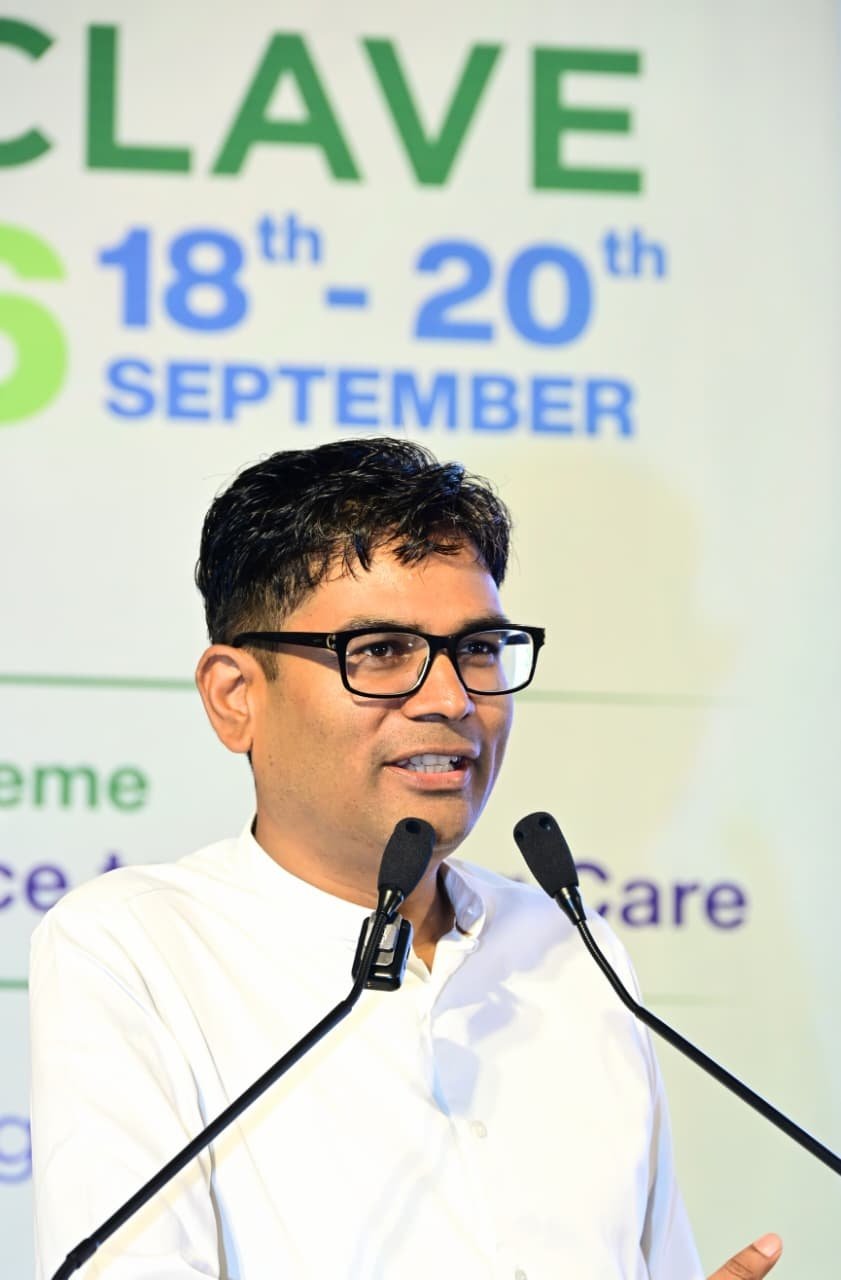
Chhattisgarh Finance Minister O.P. Choudhary addresses the fourth annual BMC Chhattisgarh Cancer Conclave-2026 in Nava Raipur on Sunday, September 20,2026 . He stressed the importance of healthy human capital, early cancer detection, specialist healthcare and medical research. Photo:primelookindia.com via CG/DPR
At BMC Chhattisgarh Cancer Conclave-2026, Finance Minister stresses prevention, early detection, specialist services and medical research as India prepares for a changing demographic profile
Key Highlights
- Finance Minister O.P. Choudhary says a healthy young population is fundamental to India’s economic growth
- Says India’s average age is around 29 years, compared with about 24 years in Chhattisgarh
- Around 65 per cent of India’s population is below 35, according to figures cited by the minister
- Warns that India’s demographic profile will change significantly over the next 10–20 years
- Calls for stronger cancer awareness, screening, early detection, specialist care and research
- Says Chhattisgarh is moving towards having more than 20 medical colleges within the next two years
- Describes Nava Raipur as Chhattisgarh’s “green capital city” and highlights its potential as a centre for health, education and research
Raipur: Strengthening cancer treatment alone will not be enough as India moves towards its Viksit Bharat 2047 ambition; keeping the country’s large young population healthy and preparing the healthcare system for an ageing demographic will be equally important, Chhattisgarh Finance Minister O.P. Choudhary said on Sunday, September 20, 2026 .
Addressing the fourth annual BMC Chhattisgarh Cancer Conclave-2026 in Nava Raipur, Choudhary placed cancer care within the larger relationship between public health, human capital and economic development.
The conclave, organised by BALCO Medical Centre, eCancer and Tata Memorial Centre around the theme “Restoring Balance to Cancer Care,” brought together cancer specialists and healthcare professionals from different parts of the country.
Choudhary said India is currently among the world’s youngest countries, with an average age of around 29 years, while Chhattisgarh’s average age is around 24 years. About 65 per cent of the country’s population is below 35, he said.
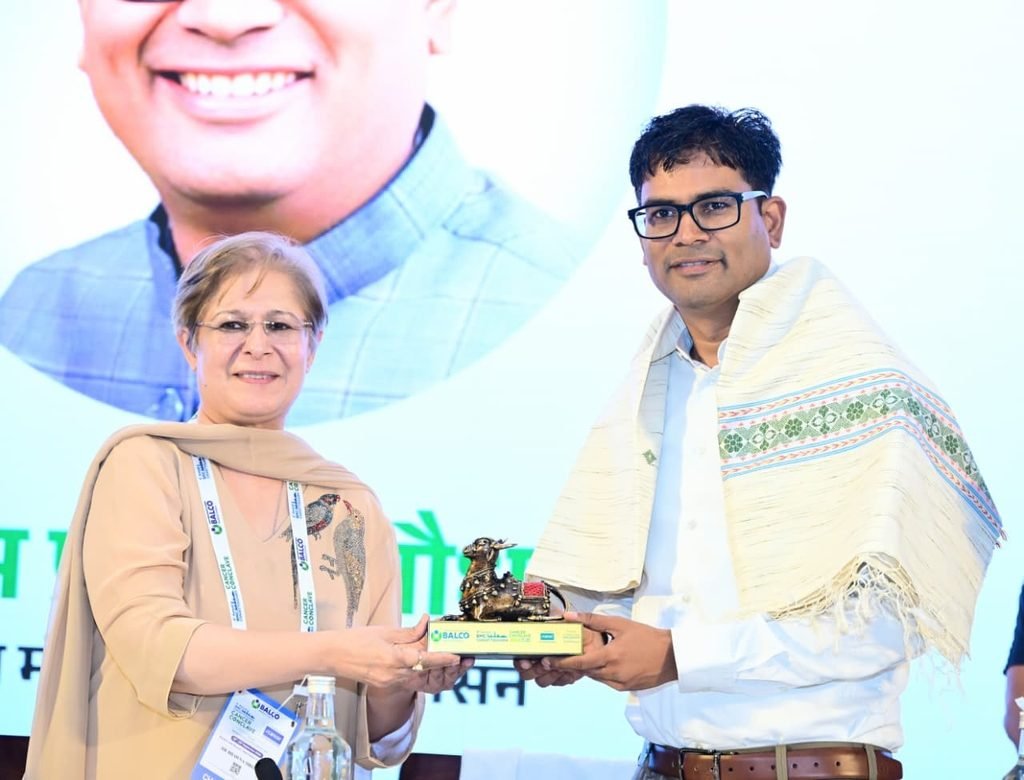
Dr Bhawna Sirohi, Medical Director, BALCO Medical Centre, felicitates Chhattisgarh Finance Minister O.P. Choudhary during the 4th BMC Chhattisgarh Cancer Conclave-2026 in Nava Raipur on Sunday, September 20. Photo:primelookindia.com via CG/DPR
For a country aspiring to become developed by 2047, he argued, this demographic advantage can deliver its full economic potential only when accompanied by good health.
“A healthy human resource base is a fundamental requirement for any rapidly growing economy,” Choudhary said, stressing the need to prepare healthcare systems in advance through better medical facilities, specialist services and research.
A Young Country Will Not Remain Young Forever
The Finance Minister drew attention to a challenge that extends beyond the immediate demands of cancer treatment.
India’s demographic profile, he said, is expected to change rapidly over the next 10 to 20 years as the average age of the population increases.
That transition will place new demands on hospitals, specialists, diagnostic facilities and the wider public-health system.
His central concern was that economic development and public health cannot be pursued on separate tracks. As incomes, urbanisation and life expectancy change, healthcare infrastructure will have to evolve simultaneously.
Choudhary cautioned against a situation in which the country becomes economically stronger without adequately preparing for the health challenges accompanying demographic change.
The issue assumes particular importance in cancer care, where treatment can be complex and expensive and where timely diagnosis can substantially influence the course of care.
Prevention and Early Detection Alongside Treatment
Choudhary said strengthening healthcare must keep pace with economic growth.
While modern treatment facilities remain essential for serious illnesses such as cancer, he emphasised that the response must also include awareness, timely screening, early detection and access to contemporary medical care.
This shifts the conversation from treating disease after it has progressed to building a healthcare system capable of identifying risks and illnesses earlier.
Cancer care, in this context, becomes not merely a question of hospitals and sophisticated treatment technology but also of public awareness, screening networks, trained professionals and access to specialist advice.
The conclave’s theme, “Restoring Balance to Cancer Care”, similarly places attention on making treatment more effective, balanced and patient-centred.
From One Medical College to an Expanding Network
Choudhary also recalled the limited medical education infrastructure available when Chhattisgarh was created.
He said that around 25–26 years ago, the state had only one medical college in Raipur, making admission difficult even for students securing relatively high ranks in the then Pre-Medical Test.
Chhattisgarh has since considerably expanded its medical education and healthcare infrastructure, he said, adding that the state is moving towards having more than 20 medical colleges over the next two years.
The expansion is important not merely in terms of the number of institutions.
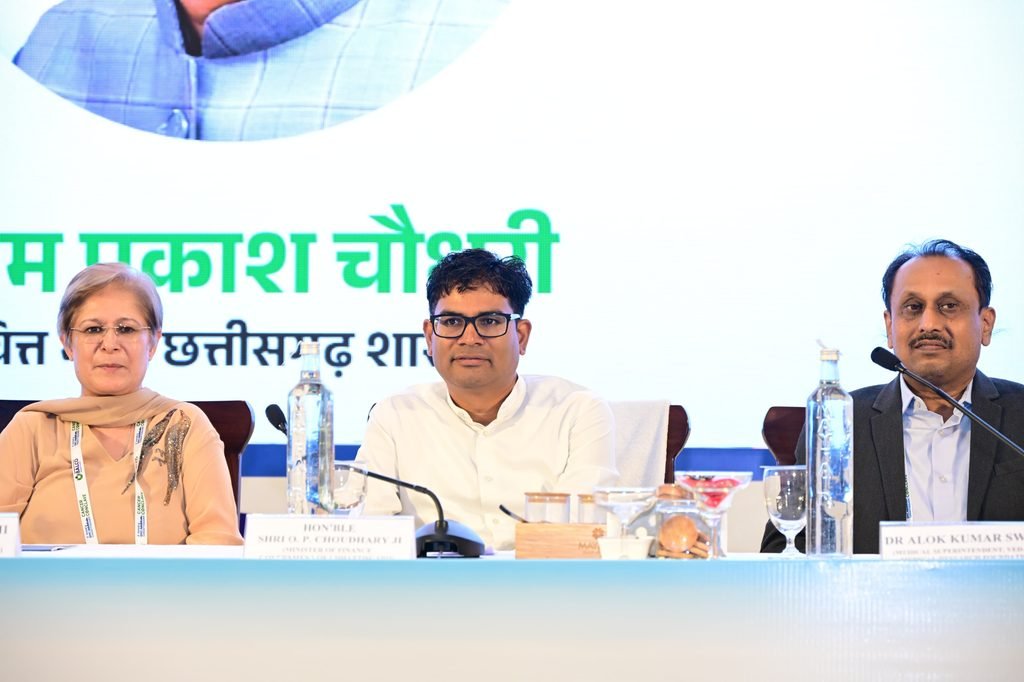
Finance Minister O.P. Choudhary with experts at the BMC Chhattisgarh Cancer Conclave-2026 in Nava Raipur on September 20. The conference focused on the theme “Restoring Balance to Cancer Care.” Photo:primelookindia.com via CG/DPR
More medical colleges potentially mean a larger pool of doctors, opportunities for specialist training, expanded research capacity and greater availability of medical professionals across the state.
For cancer care in particular, the challenge extends beyond creating physical infrastructure to developing trained oncologists, surgeons, radiologists, pathologists, nurses and other specialised healthcare professionals.
Research and Specialist Services Need Greater Space
The Finance Minister thanked BALCO Medical Centre and the Surgical Research Foundation for providing medical services to people from Chhattisgarh and surrounding regions.
He also acknowledged doctors associated with the event, including Dr Yashwant Kashyap, Dr Diwakar Pandey, Dr Alok Kumar Swain and Dr Abhinav Ingle, and welcomed specialists who had travelled from different parts of the country to attend the conclave.
Such conferences, he said, provide an opportunity for medical professionals to exchange knowledge and experience while encouraging new technologies and improved treatment practices in cancer care.
That exchange becomes particularly relevant as oncology evolves rapidly, with advances in diagnostics, surgical techniques, radiation therapy and other areas continually changing approaches to cancer management.
Nava Raipur as a Health and Research Destination
Choudhary also placed the conclave within the wider development of Nava Raipur.
He described the planned city as Chhattisgarh’s “green capital city”, highlighting its greenfield development, open spaces and recreational facilities.
He invited visiting doctors and specialists to explore the city during their stay.
More significantly, he identified healthcare, education, research and modern institutions as important components of Nava Raipur’s future development.
The presence of specialised medical institutions and national-level professional conferences can contribute to that objective by bringing clinicians, researchers and institutions into closer interaction.
For Chhattisgarh, the opportunity is therefore twofold: expand access to healthcare for its own population while simultaneously developing an ecosystem capable of attracting specialists, medical education, research and advanced treatment facilities.
Cancer Care and the Human-Capital Question
Choudhary’s address ultimately connected cancer care with a larger policy question.
A young population is frequently described as India’s demographic dividend. But youth alone does not guarantee economic productivity. Education, skills and employment matter—and so does health.
A workforce affected by preventable disease, delayed diagnosis or inadequate access to treatment cannot contribute to economic development at its full potential.
That makes investment in health an investment in human capital as much as a social-sector expenditure.
For Chhattisgarh, where medical education infrastructure has expanded considerably since the state’s formation, the next challenge will increasingly concern the quality, reach and specialisation of healthcare.
Cancer provides a particularly demanding test.
Better hospitals and treatment technology are essential, but so are awareness, screening, early diagnosis, trained specialists, research and patient-centred care.
As India looks towards 2047, Choudhary’s message at the Nava Raipur conclave was that economic ambition and healthcare preparedness must advance together.
A developed economy ultimately requires something even more fundamental—a population healthy enough to build and sustain it.

YOU MAY LIKE THIS