Reg No. - CHHBIL/2010/41479ISSN - 2582-919X

From Conflict to Celebration: Bastar Lights 1,986 Locations Under Seva Sankalp Abhiyan
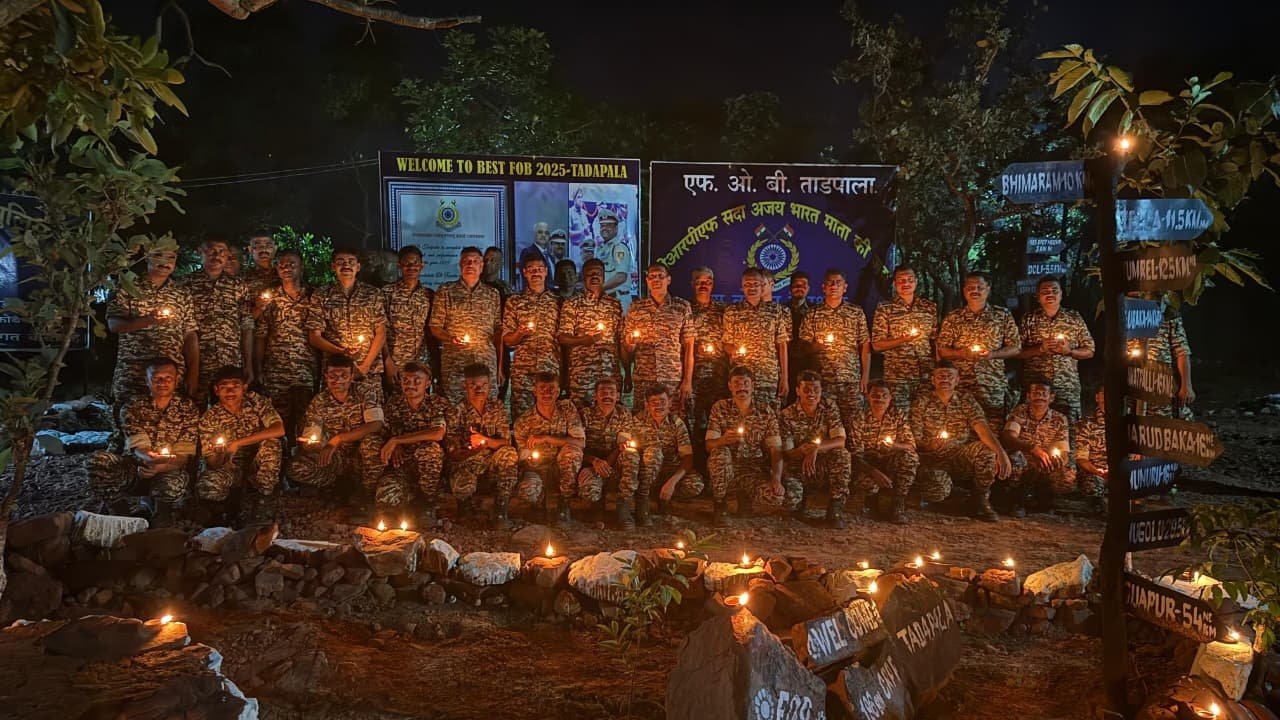
A Different Light Over Bastar: Security personnel join the Bastar Seva Sankalp Abhiyan by lighting diyas on Thursday September 17, 2026, as 1,986 locations across the seven districts of Bastar division participated in programmes marking Prime Minister Narendra Modi’s birthday. From villages affected by Naxal violence to security camps, police stations and remote areas, the illumination reflected a Bastar increasingly embracing public celebration, peace and normalcy-Photo Credit:primelookindia.com via CG/DPR
From Kanker to Sukma’s Karregutta hills, diyas illuminate villages, security camps, police stations and memorials as Bastar marks PM Modi’s birthday with a message of service, peace and changing times
There was a time when darkness descending over many parts of Bastar meant doors closing early, roads becoming deserted and movement shrinking under the shadow of Naxal violence. On Thursday , September 17, 2026 evening, darkness produced a very different picture: rows of small earthen lamps glowing at memorials, police stations, security camps, villages and remote outposts.
Under the Bastar Seva Sankalp Abhiyan, diyas were lit at 1,986 locations across the seven districts of Bastar division on September 17, according to information released by the Chhattisgarh government.
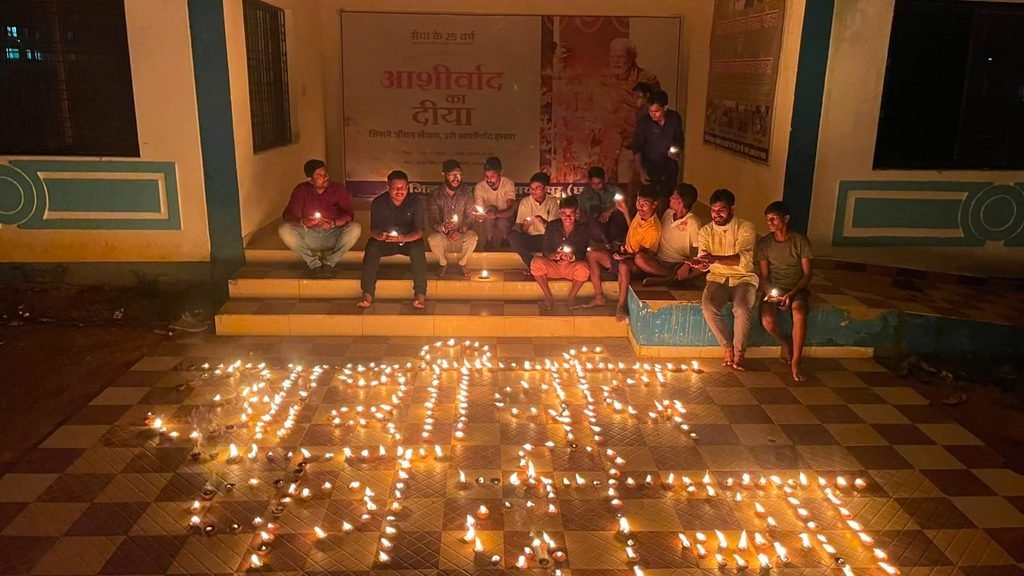
Diyas Mark a Changing Bastar: People gather around rows of illuminated diyas during the Bastar Seva Sankalp Abhiyan on September 17, 2026. The programme was organised across Bastar as part of the wider campaign marking Prime Minister Narendra Modi’s birthday and 25 years of public service-Photo Credit:primelookindia.com via CG/DPR
The programme was part of the wider Seva Sankalp Abhiyan. Separate contemporary reports confirm that lamp-lighting and memorial programmes were held in Bastar, including at Amar Vatika in Jagdalpur, where Deputy Chief Minister and Home Minister Vijay Sharma paid tribute to those killed in the conflict.
But the significance of the Bastar photographs goes beyond another government programme.
They capture something that has become increasingly visible in parts of the region: the reclamation of public space.
When an Evening Gathering Itself Tells a Story
The supplied government account says lamps were lit in 107 villages that had witnessed major Naxal incidents and loss of life — 40 in Bijapur, 31 in Sukma, 11 each in Dantewada and Narayanpur, nine in Kanker, three in Kondagaon and two in Bastar district.
Another 177 locations associated with martyrs’ memorials and statues were illuminated.
Nine rehabilitation centres joined the programme, as did 393 security camps and 122 police stations.
Perhaps most striking is the government’s figure for villages described as formerly severely Naxal-affected: 1,031 villages participated in the lamp-lighting exercise.
The symbolism is difficult to miss.
A security camp illuminated with diyas is not evidence by itself that an insurgency has ended. Nor does a celebration erase decades of killings, displacement, fear and distrust. Bastar’s transformation should therefore not be reduced to a convenient declaration that every problem has disappeared.
Yet public activity in places once associated predominantly with violence is itself worth documenting.
When residents, security personnel and communities can gather after sunset, light lamps, organise ceremonies and participate in public events, the photographs record a change in everyday experience — even where the longer security and development story remains unfinished.
From Karregutta to the Police Station
The geographical spread gives the programme its particular significance.
According to the supplied information, diyas were lit from Kanker and Jhiram Ghati to Konta in Sukma and the Karregutta hills. The exercise also covered 147 locations where local communities were reported to have assisted security personnel during anti-Naxal operations.
Across the seven districts, the government reported lamp-lighting at 824 locations in Bijapur, 273 in Dantewada, 262 in Kanker, 245 in Sukma, 225 in Narayanpur, 99 in Kondagaon and 58 in Bastar district.
Those figures total 1,986.
The photographs give these statistics a human dimension. Security personnel stand together holding lamps. Diyas illuminate a martyrs’ memorial. A lone person bends over a rangoli surrounded by points of light. Elsewhere, groups sit together before hundreds of flames.
These are modest scenes. That is precisely what makes them important.
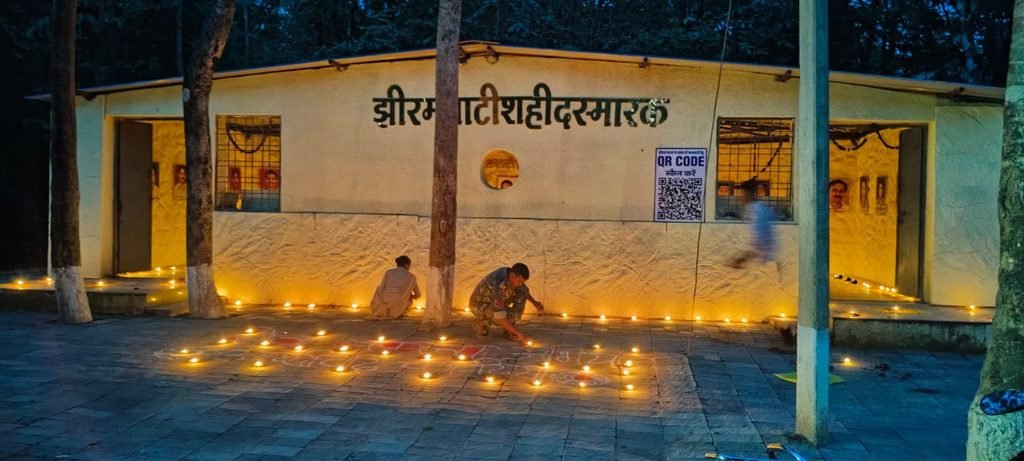
Light Reaches Remote Bastar: Diyas illuminate a public space in Bastar during the Seva Sankalp Abhiyan. The government said the September 17 programme extended to villages previously affected by Naxal violence as well as rehabilitation centres, memorials, security camps and police stations-Photo Credit:primelookindia.com via CG/DPR
For regions emerging from prolonged conflict, normality is often not announced by a single dramatic event. It arrives through ordinary things becoming possible again — a road travelled after sunset, a school functioning regularly, a weekly market attracting families, a festival celebrated publicly, or people simply gathering without fear.
Bastar Is Beginning to Celebrate Differently
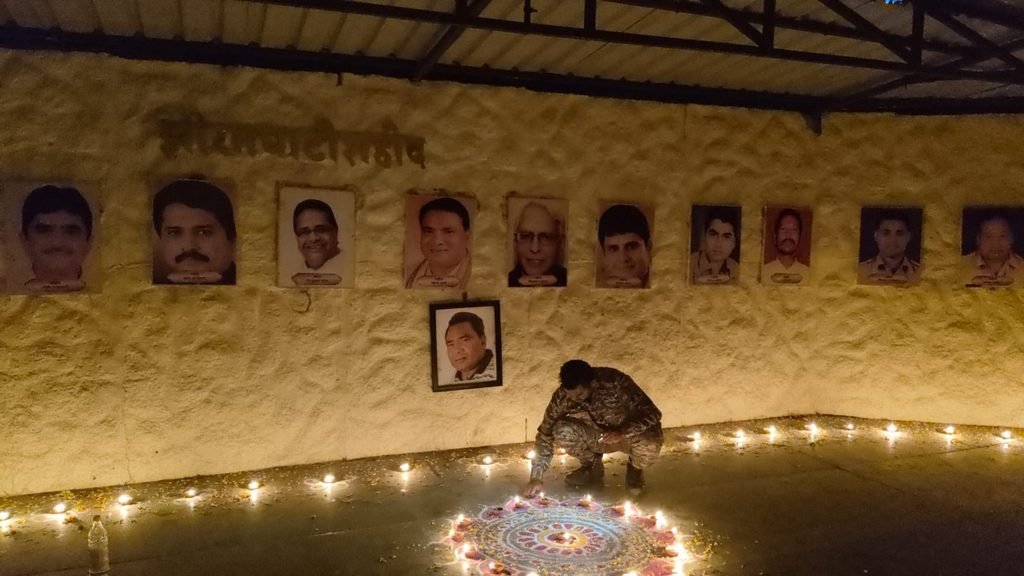
Remembering the Past, Looking Towards Peace: A security personnel lights diyas near a memorial display in Bastar during the Seva Sankalp Abhiyan on September 17, 2026. The programme combined the birthday observance with remembrance of those who lost their lives during Bastar’s years of Naxal violence and a message of peace and development. Photo: primelookindia.com via CG/DPR
Recent public programmes offer glimpses of this changing use of civic space. On September 17, Jagdalpur itself saw extensive lamp-lighting under the Seva Sankalp Abhiyan, including a major programme at the Maa Danteshwari Temple precinct and Sirhasar Chowk. Contemporary local reports described large-scale public participation in the city and surrounding areas.
The larger campaign is scheduled to continue from September 17 to October 17 with activities involving service, cleanliness, health, environment and public participation.
A Lamp Cannot End a Conflict — But It Can Mark a Change
A diya is, after all, a small flame. It cannot build a road, run a school, create employment or guarantee security. It cannot substitute for governance, justice, development or economic opportunity. Nor should the lighting of diyas at 1,986 locations be interpreted to mean that every challenge created by decades of Naxal violence has disappeared.
But symbols acquire meaning from the places in which they appear.
A lamp burning in a courtyard is a celebration. A lamp glowing at a martyrs’ memorial is remembrance. A lamp being lit at a security camp is an expression of solidarity. And a lamp illuminating a village that once lived under the shadow of violence can represent something more — the gradual return of ordinary life.
Perhaps this is the more important story emerging from Bastar today. The change is not merely about pushing violence back; it is also about filling spaces once associated with fear with schools, markets, roads, festivals, cultural programmes and community gatherings.
The Bastar Seva Sankalp Abhiyan was organised on Prime Minister Narendra Modi’s birthday, but the scenes it produced also reflected this wider transition. People gathered, security personnel participated and diyas illuminated places that have carried painful memories of conflict.
The real measure of Bastar’s transformation, however, will come after the lamps have gone out.
The roads must remain travelled, schools must stay open, markets must remain busy, young people must find opportunities, communities must be able to celebrate without fear — and peace must become an everyday reality rather than an exceptional occasion.

YOU MAY LIKE THIS