Reg No. - CHHBIL/2010/41479ISSN - 2582-919X

India Must Aim to Be an Early Leader in Emerging Technologies: PM Modi
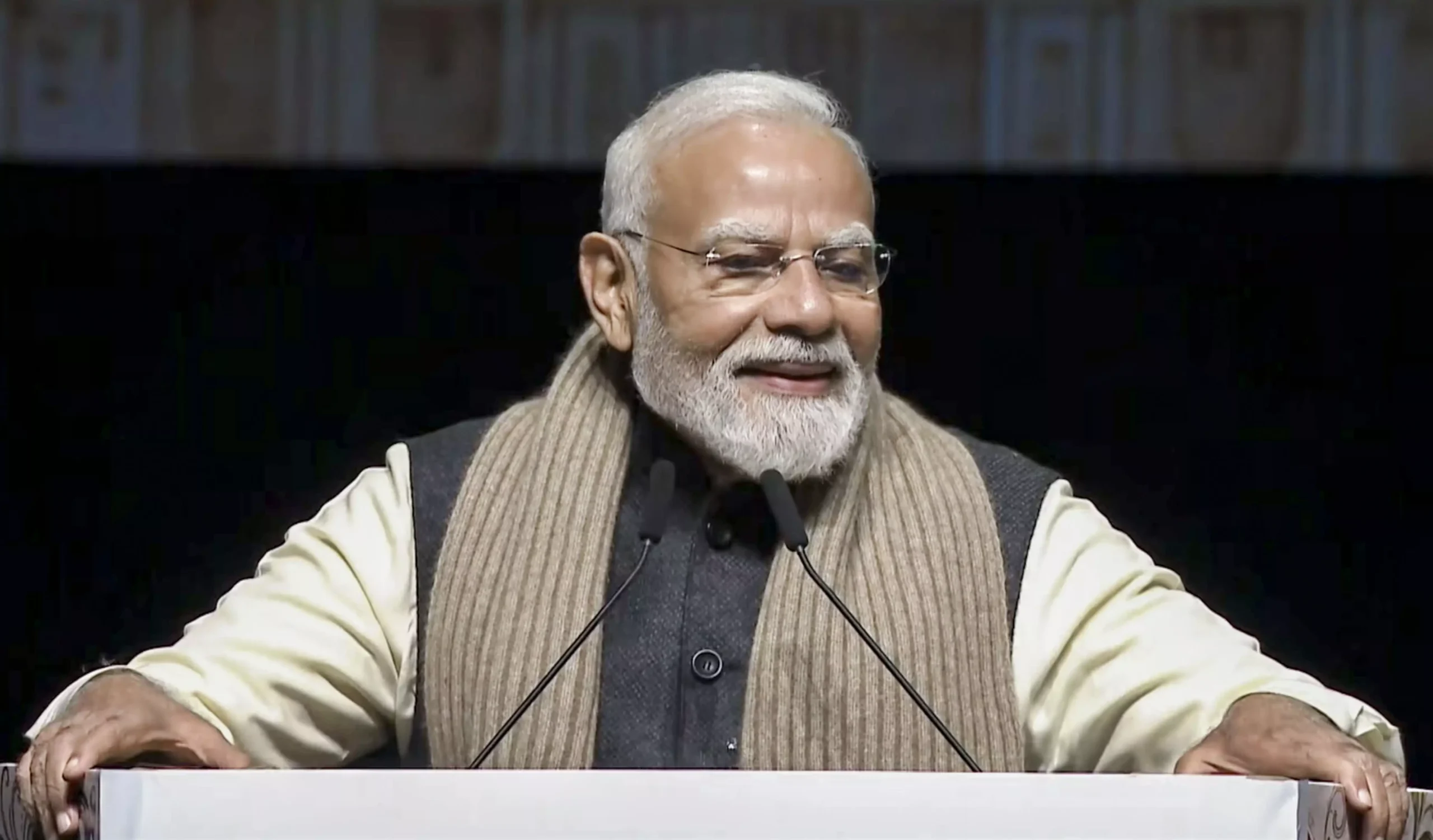
Technology Ambition: Prime Minister Narendra Modi has called on India to aspire to be among the early leaders in emerging technologies as the country prepares for the next phase of its semiconductor push. Modi will inaugurate the fifth edition of SEMICON India 2026 at Yashobhoomi in New Delhi on Thursday, September 17.2026 (File Photo)
Ahead of SEMICON India 2026, Prime Minister calls for deeper industry-government collaboration in semiconductors, AI and quantum computing as India moves from building foundations to scaling its technology ecosystem
Key Highlights
- PM Modi says India should aspire to be among the early leaders in emerging technologies.
- He called for stronger industry participation in semiconductors, AI, quantum computing, innovation and skilling.
- SEMICON India 2026 runs from September 17–19 at Yashobhoomi, New Delhi.
- More than 600 exhibitors, 300 international companies and delegations from over 40 countries are expected.
- The fifth edition carries the theme “Silicon to Systems: Building the Ecosystem.”
New Delhi: Prime Minister Narendra Modi has said India should aspire to become one of the early leaders in emerging technologies, calling for closer collaboration between government and industry as the country seeks to expand its semiconductor capabilities and strengthen its position in technologies including artificial intelligence and quantum computing.
Modi made the remarks while chairing a Semiconductor Roundtable with leading global and Indian industry executives at Seva Teerth on Wednesday, September 16, 2026 ahead of the inauguration of SEMICON India 2026 in New Delhi on Thursday.
“India should aspire to be among the early leaders in emerging technologies,” the Prime Minister said, according to an official account of the meeting.
The statement comes as the fifth edition of SEMICON India opens at Yashobhoomi in Dwarka. The three-day conference and exhibition, running from September 17 to 19, is being held under the theme “Silicon to Systems: Building the Ecosystem.” Modi is scheduled to inaugurate the event on Thursday.
From Building Foundations to Scaling Up
At the roundtable, Modi said India had made significant progress in semiconductors and that the country’s ecosystem was moving from its foundational phase towards greater scale and opportunity.
He emphasised India’s talent base, technology adoption and infrastructure and sought greater industry participation in skilling and innovation. AI and quantum computing were among the emerging technologies specifically discussed.
The Prime Minister also referred to the target of training one crore people in artificial intelligence, arguing that India’s talent pool combined with the expertise of global technology companies could create substantial opportunities.
Policy predictability was another focus of the discussion. Modi reiterated the government’s commitment to maintaining a predictable and responsive policy environment while acknowledging that policies would need to evolve alongside rapidly changing technologies and industry requirements.
He invited semiconductor executives to suggest policy and administrative changes and encouraged them to participate in the next phase of India’s semiconductor expansion.
Representatives from companies and organisations including Micron, Intel, AMD, IBM Research, ASML, Applied Materials, Tata Electronics, Foxconn, NXP, Infineon, Tokyo Electron and CG Power participated in the roundtable.
SEMICON India Brings Global Industry to Delhi
SEMICON India 2026 will bring together more than 600 exhibitors, including 300 international companies, and delegations from more than 40 countries, according to the Ministry of Electronics and Information Technology.
The programme covers semiconductor manufacturing, design, packaging, equipment, research and development, investment, supply chains and other parts of the electronics ecosystem. Sessions over the three days will include discussions on next-generation manufacturing, advanced packaging, equipment R&D, chip design and ease of doing business.
Government figures say 12 semiconductor projects were approved under Semicon 1.0, while the industry is now looking towards the next phase of the programme.
The transition reflected in this year’s theme — from “Silicon to Systems” — places the focus not merely on manufacturing chips but on developing a wider ecosystem connecting design, fabrication, packaging, equipment, research, talent and electronics systems.
For India, the challenge now is to translate policy support, investment commitments and its existing technology workforce into commercially competitive capabilities across that value chain.

YOU MAY LIKE THIS