Reg No. - CHHBIL/2010/41479ISSN - 2582-919X

Armed Naxalism Eliminated, but ‘Dimaagi Naxals’ Remain: CM Sai Echoes PM Modi’s Warning-By-Kumar Bahukhandi (Sunday Analysis )
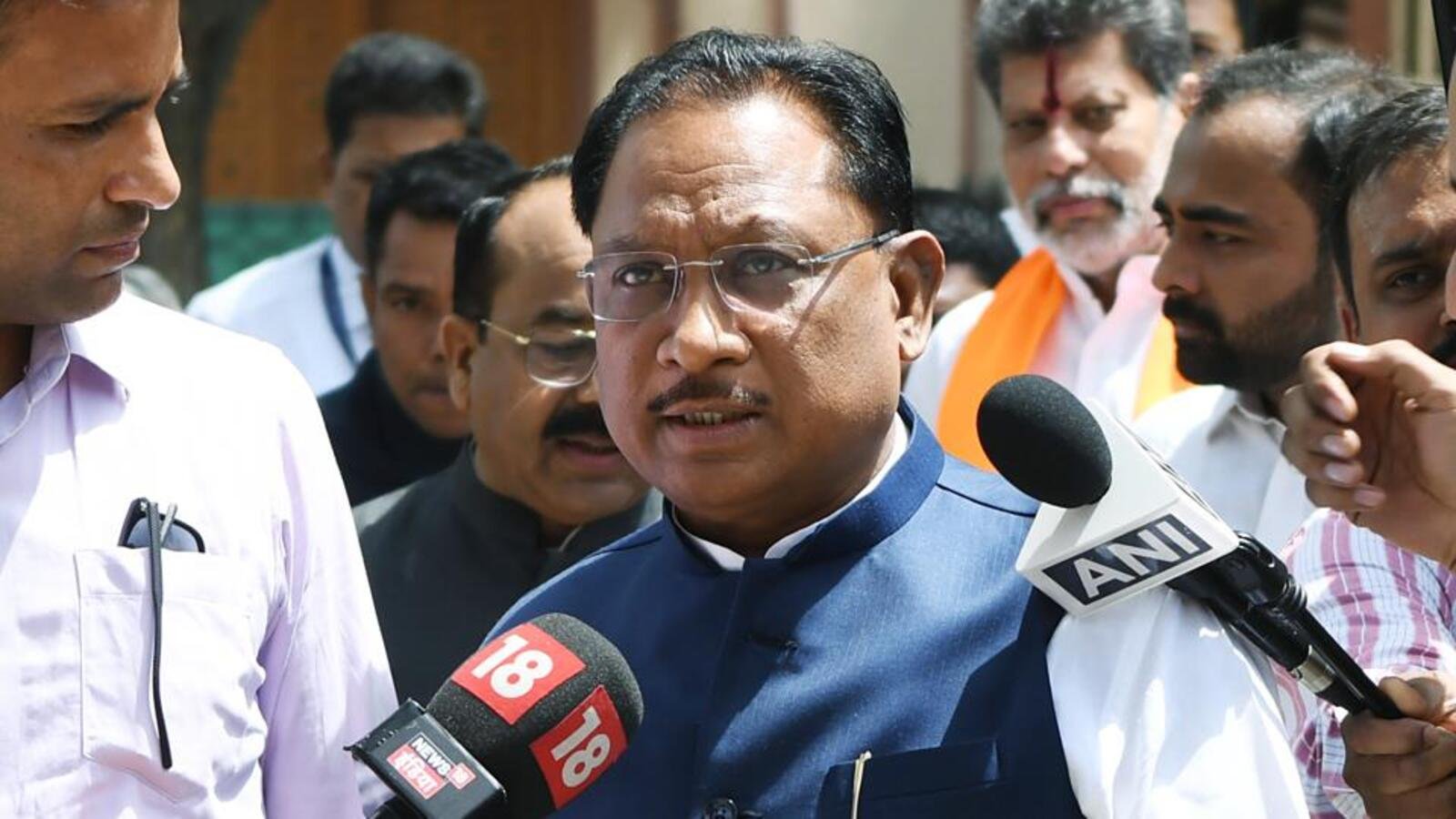
Chhattisgarh Chief Minister Vishnu Deo Sai interacts with the media. Sai backed Prime Minister Narendra Modi’s warning on ‘dimaagi Naxals’ following the Prime Minister’s 80th Independence Day address from the Red Fort, maintaining that the decline of armed Naxalism must be followed by a sustained challenge to extremist ideology- Photo Credit: ANI
Chhattisgarh Chief Minister says the battle against armed Maoism has reached a decisive stage, but warns that extremist ideology can survive beyond the battlefield
Key Factors
- CM Vishnu Deo Sai says armed Naxalism has been eliminated while the ideological challenge remains
- Sai backs Prime Minister Narendra Modi’s warning against what he described as ‘dimaagi Naxals’
- The remarks come as former Maoist strongholds in Bastar witness Independence Day celebrations and the Tricolour
- The decline of armed insurgency shifts attention from security operations to development, rehabilitation and ideological resistance
- The expression ‘dimaagi Naxal’ triggers a wider political debate over where extremism ends and legitimate democratic dissent begins
Chhattisgarh Chief Minister Vishnu Deo Sai has backed Prime Minister Narendra Modi’s warning that the defeat of armed Naxalism does not necessarily mean the disappearance of the ideology that sustained it for decades.
Speaking in Raipur after the 80th Independence Day celebrations, Sai referred to the Prime Minister’s address from the Red Fort and said Modi had made an important reference to Chhattisgarh while speaking about the transformation taking place in areas once affected by Left-Wing Extremism.
🔴 “The Prime Minister is absolutely right. Armed Naxalism has been eliminated, but ‘dimaagi Naxals’ still remain,” Sai said, referring to ideological adherents of extremism.
Sai made the remarks while visiting the Independence Day exhibition organised by the Chhattisgarh Public Relations Department at the historic Town Hall in Raipur. The exhibition highlights the contribution of Chhattisgarh’s freedom fighters and the state’s journey of development.
His statement, however, goes considerably beyond the immediate Independence Day celebration. It touches upon the next and potentially more complex phase of Chhattisgarh’s decades-long struggle against Maoist extremism.
From the Gun to the Battle of Ideas
For decades, the challenge of Naxalism in Chhattisgarh was visible and violent.
It existed in the form of armed cadres, improvised explosive devices, ambushes, attacks on security forces, disruption of roads and infrastructure, intimidation of villagers and parallel structures of control in remote forest areas.
Bastar became one of the principal theatres of that conflict.
But the situation on the ground has undergone a dramatic transformation. Areas once considered inaccessible have increasingly come within the reach of civil administration and security forces. Roads, mobile connectivity, schools, health services and government welfare programmes are reaching communities where the presence of the State was once weak.
This Independence Day itself provided powerful symbolism.
In Boter village in the Abujhmad region of Narayanpur district, the Tricolour was hoisted for the first time as residents joined Independence Day celebrations. Villagers and children participated alongside security personnel in an area that had previously remained under Maoist influence.
Such scenes perhaps explain why Sai considers Modi’s remarks particularly relevant to Chhattisgarh.
The military weakening of an insurgency, however, is different from the disappearance of the ideas that produced it.
That distinction formed the core of Modi’s Independence Day intervention.
From the Red Fort, the Prime Minister said armed Naxalism had been curbed, but warned of what he called “dimaagi Naxals”—people whom he accused of continuing to encourage destructive or violent thinking even after the armed movement had been weakened. He called for such tendencies to be identified and isolated while young Indians are brought together around the objective of building a developed country.
Sai’s endorsement gives that national argument particular significance in Chhattisgarh, a state that has experienced the human cost of Maoist violence more directly than most parts of India.
Chhattisgarh Has Paid a Heavy Price
For Chhattisgarh, Naxalism has never been merely an abstract ideological argument.
Security personnel have been killed in attacks and ambushes. Civilians, tribal villagers, public representatives and government employees have lost their lives. Roads, schools, communication infrastructure and development projects have repeatedly been targeted.
The consequences went beyond casualties.
Fear restricted movement. Development became difficult in remote areas. Government officials were unable to work freely in several pockets. Children and young people living in affected villages often grew up with opportunities dramatically different from those available elsewhere in the state.
That is why the present transformation in Bastar has importance beyond security statistics.
When a road reaches an isolated settlement, it does more than improve transport. It connects residents with markets, hospitals, schools and government institutions.
When a mobile tower begins functioning, communication replaces isolation.
When a school functions normally, children acquire an alternative to the world of violence surrounding them.
And when the national flag is raised freely in a village where Independence Day could not earlier be openly celebrated, it represents a psychological change as much as an administrative one.
What Comes After Armed Naxalism?
The decline of armed Maoism raises a crucial question: what should replace it?
Security operations can reclaim territory. They cannot, by themselves, create lasting confidence among people.
That requires administration.
It requires schools that have teachers, health centres that have doctors and medicines, roads that remain usable, employment opportunities that give young people a reason to remain within the mainstream, and government institutions that tribal communities regard as accessible rather than distant.
This is where Chhattisgarh’s next challenge begins.
A village cannot merely become “Naxal-free”. It must become economically and socially capable of remaining free of extremism.
For the Sai government, therefore, the post-Naxal phase may prove just as important as the security campaign itself.
The State must demonstrate that peace produces tangible dividends.
The Meaning of ‘Dimaagi Naxal’ Needs Care
There is another dimension that cannot be ignored.
The expression “dimaagi Naxal” is politically powerful, but it is also potentially broad.
Opposition leaders have already challenged Modi’s terminology, arguing that political disagreement and criticism of government policy must not be equated with sympathy for Maoist violence. Congress leaders criticised the Prime Minister’s formulation following the Red Fort address, while the government side maintained that the remarks were directed at people promoting Maoist ideology rather than opposition politicians generally.
That distinction matters in a democracy.
There must be no ambiguity about the legitimacy of combating an ideology that advocates armed overthrow of the constitutional order or encourages violence.
But disagreement with a government, criticism of security policy, advocacy for tribal rights, journalism, academic debate and peaceful protest are also legitimate parts of democratic life.
The strongest response to extremist ideology is therefore not the suppression of debate. It is the ability of democracy to defeat extremist arguments through development, justice, participation and facts.
If young people in Bastar can obtain education, employment, connectivity and genuine participation in decision-making, the appeal of an ideology built around alienation becomes progressively weaker.
That is a more enduring victory than merely eliminating armed cadres.
Bastar’s Transformation Carries a National Message
For years, reports from Bastar were dominated by encounters, casualties, landmines and Maoist attacks.
The emerging narrative is increasingly different.
Villages are being connected. Administrative access is expanding. Formerly inaccessible areas are witnessing public events. People are interacting more openly with government institutions, while surrendered cadres are being encouraged to return to mainstream life.
The symbolism of the Tricolour appearing in former Maoist strongholds therefore carries national significance.
It says that territory once associated almost exclusively with insurgency can be reclaimed not only physically but socially.
Sai’s statement should consequently be understood against this transformation.
🔴 “Armed Naxalism has been eliminated, but ‘dimaagi Naxals’ remain,” is not merely a political slogan when spoken by the Chief Minister of a state that has spent decades confronting one of India’s most violent internal-security challenges.
It raises the question of what victory over extremism actually means.
If victory means only removing armed fighters from forests, it remains incomplete.
If it means ensuring that another generation never sees violence as its only route to justice, opportunity or political expression, the task is much larger.
From Security Victory to Democratic Consolidation
Chhattisgarh now has an opportunity that would have appeared distant only a few years ago.
The State can convert security gains into a permanent social transformation of Bastar.
That will require investment, but also sensitivity.
Tribal culture and identity must remain central to development rather than becoming casualties of it. Local communities must participate in decisions affecting land, forests and livelihoods. Young people need opportunities that allow them to imagine their futures within Bastar rather than outside it.
Police and security forces have played an undeniable role in creating the conditions in which this transformation can take place.
But the ultimate measure of success will come when their extraordinary deployment is no longer necessary.
A peaceful Bastar in which the administration functions normally, children attend school without fear, businesses invest, tourists visit, tribal traditions flourish and citizens freely participate in democracy would constitute the most decisive answer to Maoism.
The Battle After the Battle
Prime Minister Modi’s warning and Sai’s endorsement indicate that the government believes the confrontation with Naxalism is entering an ideological phase.
That phase demands considerable maturity.
Ideas cannot simply be encountered with weapons. They have to be challenged by better ideas and better outcomes.
Violence must be confronted firmly. Those advocating armed insurrection cannot claim the protection accorded to peaceful democratic disagreement.
At the same time, democratic criticism must retain its legitimate space.
The Constitution itself provides the strongest framework for drawing that distinction.
For Chhattisgarh, therefore, the end of armed Naxalism should not merely mark the conclusion of an old battle. It should represent the beginning of something more ambitious: the transformation of former conflict zones into regions of opportunity, confidence and democratic participation.
The real victory will arrive when a young person growing up in the remotest village of Bastar sees education rather than extremism, enterprise rather than violence, and democratic participation rather than the gun as the path towards changing society.
“The ultimate victory over Naxalism will come not merely when the guns fall silent, but when the ideology of violence loses its appeal.”

YOU MAY LIKE THIS