Reg No. - CHHBIL/2010/41479ISSN - 2582-919X

India’s Future Needs Solutions, Not Slogans-By-Kumar Bahukhandi (Editorial)
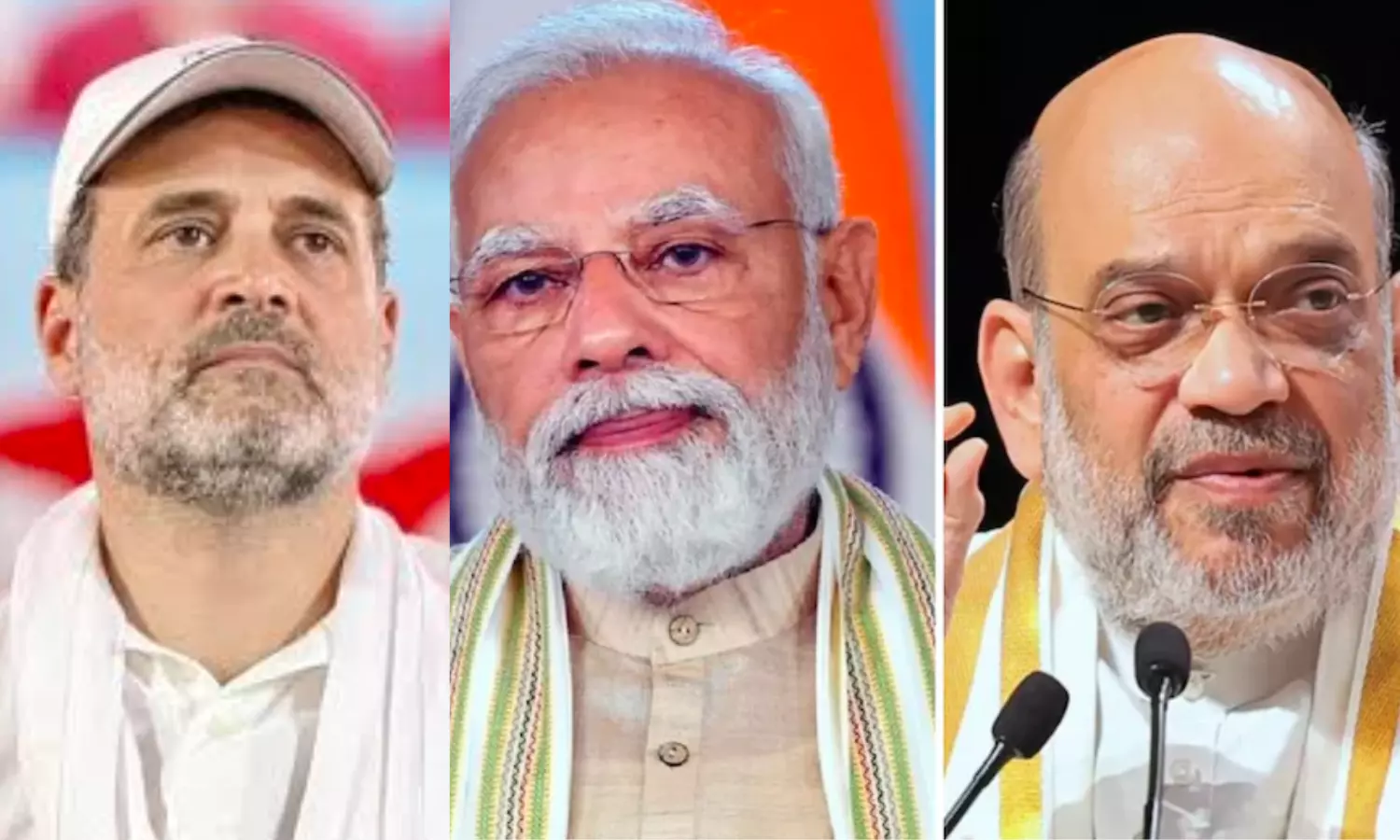
Political rhetoric versus policy reforms: Rahul Gandhi’s remarks targeting Prime Minister Narendra Modi and Home Minister Amit Shah have reignited debate over whether India’s students need stronger political messaging or stronger institutional reforms. (Representative File Photo)
Calling Modi and Shah ‘India’s Past’ May Make Headlines, But It Doesn’t Solve Students’ Problems
The politics surrounding India’s education system has once again shifted from policy to personality. Congress leader Rahul Gandhi’s latest remark—telling Prime Minister Narendra Modi and Union Home Minister Amit Shah that they are “India’s past” and should be careful in dealing with “India’s future”—is politically sharp, but it also raises an important question.
Who exactly represents India’s future?
If the yardstick is merely age, Rahul Gandhi himself is a senior politician in his mid-sixties, not a first-time youth leader. Indian democracy is not governed by birth certificates or generational labels. It is governed by leadership, accountability and the ability to deliver results.
Student protests over examination irregularities deserve serious attention. Young people are justified in demanding transparent examinations, accountability for paper leaks and a system that rewards merit rather than manipulation. Their concerns are genuine and cannot be dismissed by any government.
However, the debate changes when student issues become vehicles for political messaging.
Rahul Gandhi’s statement appears designed to create a contrast between the government and India’s youth. But the question remains whether such rhetoric contributes to solving the crisis or merely deepens political polarization.
Ironically, on the same day, Parliament approved stronger amendments to the Public Examinations (Prevention of Unfair Means) Act, introducing tougher punishments for paper leaks, organised examination fraud and examination mafias. Prime Minister Modi announced fast-track courts, a dedicated task force and institutional reforms aimed at protecting students’ futures.
One may debate whether these measures are sufficient. Criticism of any government is both legitimate and necessary in a democracy. Yet fairness demands acknowledging that legislative and administrative action has accompanied the government’s promises.
The larger issue is consistency.
If opposition leaders believe the reforms are inadequate, they should explain what additional safeguards they would implement. Parliament is the appropriate forum to debate stronger laws, improved examination systems and better accountability. Reducing a complex national issue to “past versus future” risks oversimplifying a problem that requires bipartisan cooperation.
Rahul Gandhi has frequently positioned himself as the voice of young India. That role carries responsibility. Young citizens expect more than slogans; they expect constructive alternatives, practical policy proposals and reasoned debate.
Similarly, the government must remember that passing a law is only the beginning. The success of the anti-paper leak legislation will ultimately be judged not by speeches but by investigations completed on time, convictions secured, examination mafias dismantled and the restoration of public confidence.
The future of India’s students should never become collateral in political rivalry.
Neither the ruling party nor the opposition owns the aspirations of India’s youth. Those aspirations belong to the nation itself.
History remembers leaders not for the sharpness of their political one-liners but for the strength of the institutions they build.
Perhaps the real question is not who represents India’s past, but who is prepared to secure India’s future.
MY Views
Youth deserve justice, not political symbolism. The real contest should not be over who speaks louder for students, but over who delivers a fair, transparent and trustworthy examination system.

YOU MAY LIKE THIS