Reg No. - CHHBIL/2010/41479ISSN - 2582-919X

BNP Government in Dhaka Risks Squandering India’s Trust-By-Kumar Bahukhandi( Editorial)
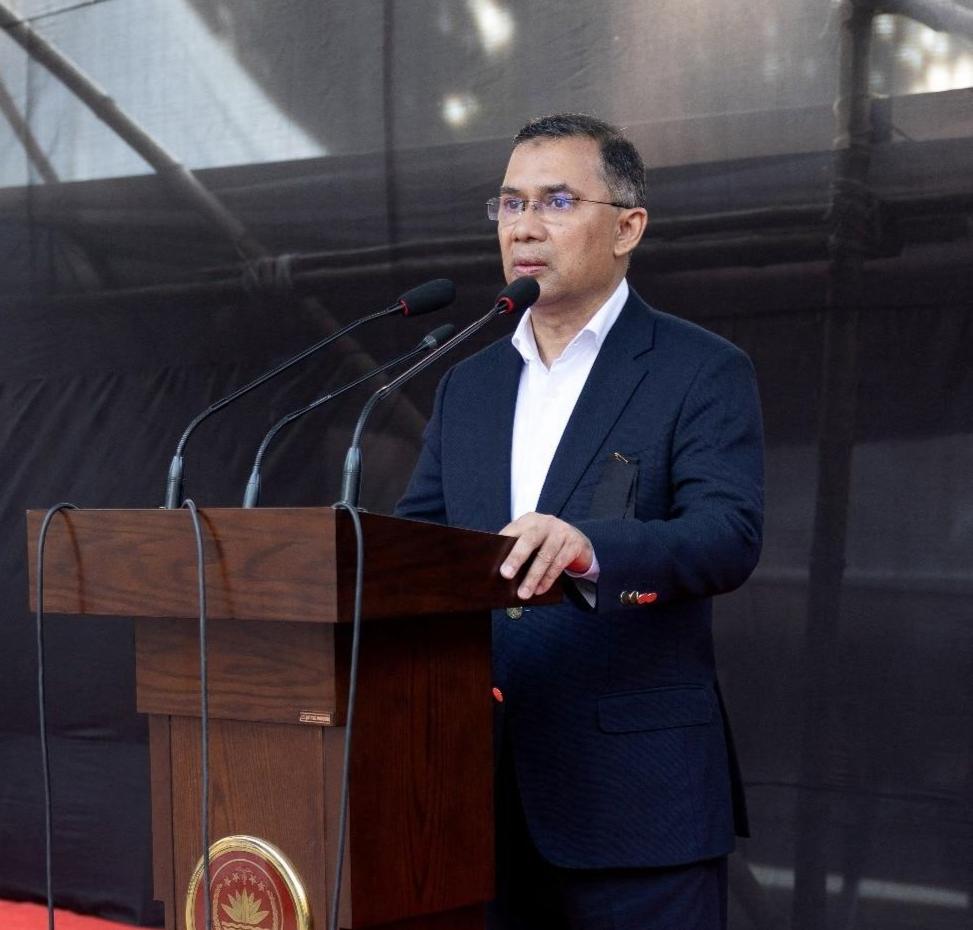
Bangladesh Prime Minister Tarique Rahman addresses a public gathering. His government faces the challenge of balancing domestic political expectations with the need to rebuild strategic trust and cooperation with neighbouring India -Photo Credit-primelookindia.com
From Promise to Prudence: Why the India–Bangladesh Reset Is Losing Momentum
Barely six months after Bangladesh’s Bangladesh Nationalist Party (BNP) government assumed office amid expectations of repairing strained ties with New Delhi, the optimism surrounding a diplomatic reset appears to be fading. What initially looked like an opportunity to restore mutual confidence is increasingly being overshadowed by recurring political friction, public rhetoric, and avoidable diplomatic confrontations.
The BNP-led administration under Prime Minister Tarique Rahman inherited a relationship already burdened by political mistrust following the tenure of the interim government headed by Muhammad Yunus, whose policies were widely perceived in New Delhi as distancing Dhaka from India’s strategic interests. Rahman’s arrival was therefore welcomed as an opportunity to rebuild one of South Asia’s most significant bilateral partnerships.
A Promising Beginning
The first few weeks after the February 2026 elections reflected genuine goodwill.
India sent senior representatives to major state events in Dhaka, signalling that New Delhi was ready to move beyond recent tensions. Prime Minister Narendra Modi extended an invitation to Tarique Rahman to visit India, while External Affairs Minister Dr. S. Jaishankar attended the funeral of BNP Chairperson Begum Khaleda Zia, underscoring India’s willingness to engage constructively with the new leadership.
Diplomatic channels reopened with renewed enthusiasm, and both capitals spoke of building a “forward-looking partnership.”
That optimism, however, has proved difficult to sustain.
Diplomatic Irritation Returns
Relations have recently become strained over Bangladesh’s repeated summoning of Indian diplomats.
Dhaka formally protested statements made by Assam Chief Minister Himanta Biswa Sarma regarding a renewed campaign to identify and deport alleged illegal Bangladeshi migrants. The Bangladeshi government also expressed concern over actions reportedly initiated by West Bengal authorities against suspected undocumented migrants.
While every sovereign nation has the right to seek clarification over issues affecting its citizens, repeated diplomatic protests over internal political statements risk creating unnecessary friction. Immigration enforcement remains India’s domestic policy domain, even when it inevitably carries cross-border implications.
Migration: A Sensitive Political Issue
Illegal migration has long been one of the most politically sensitive issues in India’s eastern and northeastern states. Assam, in particular, has witnessed decades of demographic debate, legal disputes, and electoral mobilisation centred on undocumented migration.
Bangladesh consistently maintains that many individuals identified by Indian authorities are not its citizens, making deportation a legally and diplomatically complex process.
The challenge therefore requires quiet institutional cooperation rather than public confrontation.
India and Bangladesh today share far more than a border.
Strategic Stakes Are Much Bigger
Their partnership encompasses:
- Border security and counter-terrorism cooperation.
- Connectivity through roads, railways, inland waterways and ports.
- Power trade and energy cooperation.
- Regional supply chains.
- Trade worth billions of dollars annually.
- Cultural and people-to-people exchanges.
Both countries also play central roles in the strategic balance of the Bay of Bengal and the wider Indo-Pacific.
Allowing routine political disagreements to overshadow these long-term interests would serve neither side.
The BNP’s Diplomatic Balancing Act
The BNP government faces a delicate challenge.
Domestically, it must demonstrate that it is independent of Indian influence—an issue that has historically shaped Bangladeshi politics.
Internationally, however, Bangladesh cannot afford to alienate India, its largest neighbour, a critical trading partner, and a key contributor to regional stability.
Striking this balance requires diplomatic maturity rather than symbolic confrontation.
Trust Cannot Be Taken for Granted
Trust between neighbouring countries is built gradually but can erode quickly.
India extended an early hand of engagement after the BNP assumed office. Continued diplomatic signalling that portrays routine Indian political developments as bilateral disputes risks weakening that goodwill.
Constructive dialogue, institutional mechanisms and regular high-level engagement remain the most effective means of resolving contentious issues such as migration and border management.
The Road Ahead
India and Bangladesh have demonstrated over the past decade that even complex bilateral issues can be addressed through sustained political engagement.
The current moment calls for restraint from both capitals.
Rather than allowing domestic politics to dictate diplomatic messaging, New Delhi and Dhaka should prioritise strategic cooperation, economic integration and regional stability. South Asia’s future will depend less on rhetorical exchanges and more on practical collaboration.
For the BNP government, the opportunity to reset relations with India still exists. Whether that opportunity is realised—or gradually squandered—will depend on the choices made in the months ahead.

YOU MAY LIKE THIS