Reg No. - CHHBIL/2010/41479ISSN - 2582-919X

Chhattisgarh Overhauls School Education: New Academic Calendar, Uniform Age Norms from 2027–28
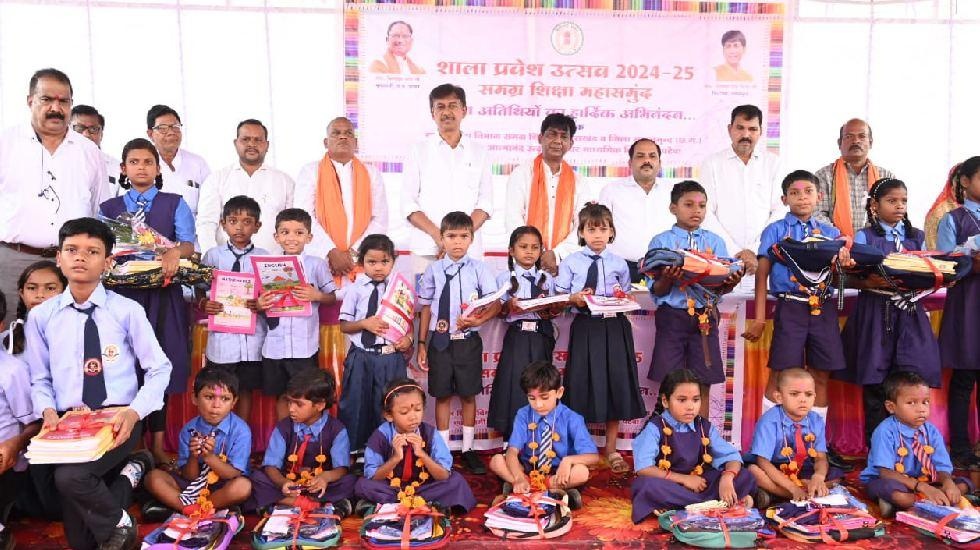
Government school students participate in classroom activities in Chhattisgarh. The state has announced a new April–March academic calendar and fixed the minimum age for Class I admission at six years in line with NEP 2020-Photo Credit -channel24india.com( Representational Image )
Key Factors
- Chhattisgarh to adopt April 1–March 31 academic session from 2027–28.
- Free textbooks, uniforms, bicycles and welfare schemes to be distributed from the first day of the academic year.
- Minimum age for Class I fixed at six years from the next academic session.
- Uniform admission norms to apply across government, aided and private schools.
- Three-month age relaxation allowed for children completing the prescribed age by July 1.
Schools to follow April–March session; Class I admission age fixed at six years in line with NEP 2020
Raipur: In a major reform aimed at aligning the state’s education system with national standards, the Chhattisgarh Government has announced two significant changes in school education. Beginning with the 2027–28 academic session, all schools across the state will adopt an April 1–March 31 academic calendar, while the minimum age for admission to Class I has been fixed at six years from the next academic session.
The twin decisions, announced by the School Education Department under the directions of School Education Secretary Dr. Kamal Preet Singh, are intended to improve academic planning, strengthen foundational learning, and ensure timely delivery of educational benefits to students.
The revised academic calendar replaces the existing June-to-April session with a nationwide April-to-March schedule followed by most major education boards. Summer vacations will continue from May 1 to June 15, ensuring no reduction in students’ holiday period.
Under the new calendar, all key educational and welfare activities—including Shala Pravesh Utsav, distribution of free textbooks, school uniforms, Saraswati Cycle Yojana bicycles, and other student welfare schemes—will commence from the very first day of the academic year, enabling uninterrupted learning from the start of the session.
In another major policy decision, the government has fixed the minimum age of six years for admission to Class I, bringing the state’s admission policy in line with the National Education Policy (NEP) 2020, the Right to Education Act, 2009, and Union Government guidelines.
Admissions will be determined based on a child’s age as on April 1 of the relevant academic year. The age criteria are:
- Balvatika-1 (Nursery): Above 3 years and below 4 years
- Balvatika-2 (KG-I): Above 4 years and below 5 years
- Balvatika-3 (KG-II): Above 5 years and below 6 years
- Class I: Above 6 years and below 7 years
To ease the transition, the government has granted a three-month relaxation, allowing children who attain the prescribed age by July 1 to be admitted during the transition period.
The revised norms will apply uniformly to government, government-aided and private schools, including admissions under the 25% Right to Education (RTE) quota. However, students promoted directly from the pre-primary section of recognised schools to Class I will continue to be admitted based on the date of birth recorded in their official school documents.
District Education Officers have been instructed to ensure strict implementation through Block Education Officers, Cluster Coordinators and school heads, while also creating awareness among parents regarding the revised admission norms.

YOU MAY LIKE THIS