Reg No. - CHHBIL/2010/41479ISSN - 2582-919X

Voice of Tribal Pride Resounds from Red Fort Grounds; Vishnu Deo Sai Speaks at National Tribal Conclave — Tribal Society Can Teach the World How to Achieve Development in Harmony with Nature
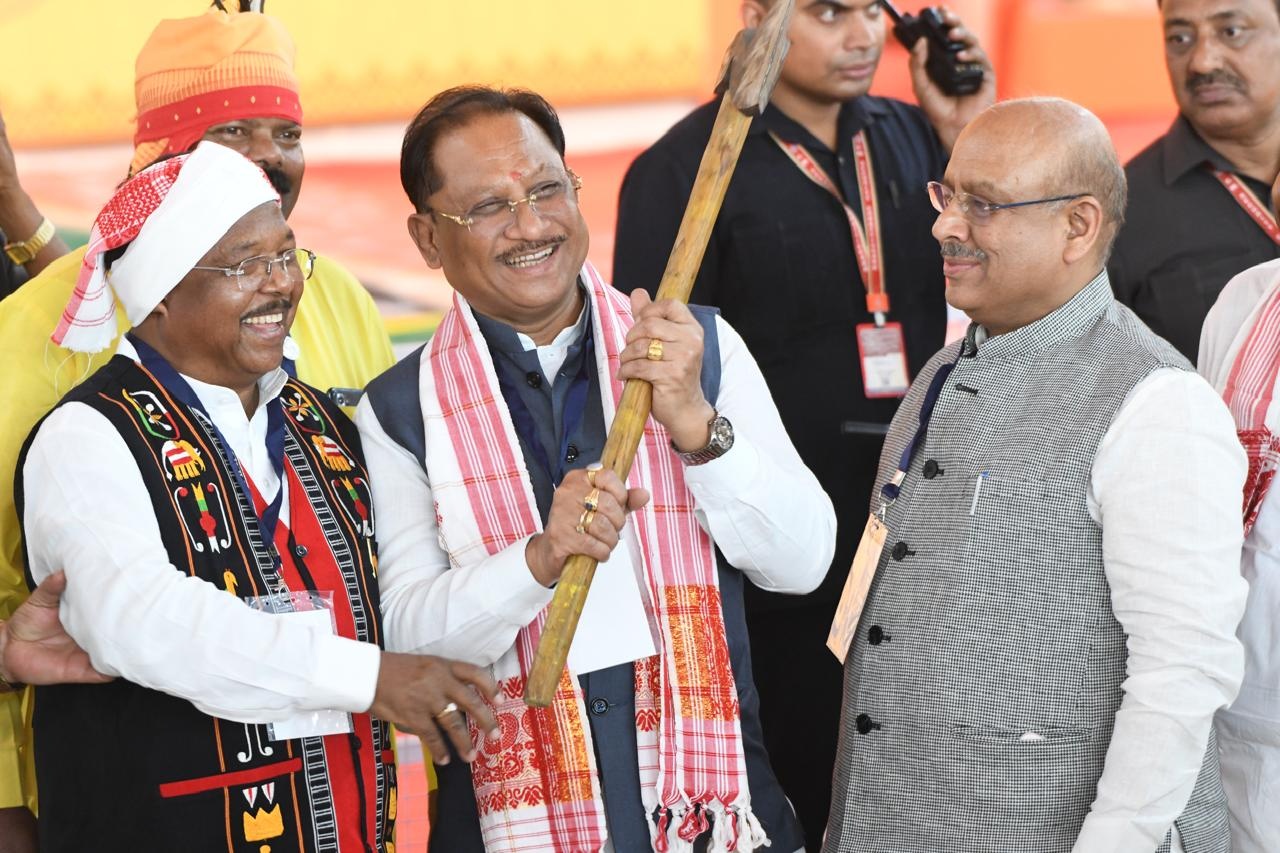
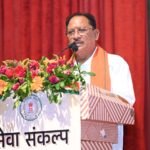
The National Tribal Cultural Conclave—organised to mark the 150th birth anniversary year of Bhagwan Birsa Munda on Sunday May 24, 2026 —where thousands of tribal representatives, youth, social activists, and members of traditional communities from across the country gathered on a single platform ,besides Chhattisgarh Chief Minister Vishnu Deo Sai and Agriculture Minister Ramvichar Netam were part of the celebration-Photo Credit CG/PR
New Delhi: . On Sunday May 24, 2026 , the historic grounds of the Red Fort in the national capital, Delhi, witnessed a magnificent display of tribal identity, cultural pride, and social consciousness.
This grand spectacle unfolded during the National Tribal Cultural Conclave—organised to mark the 150th birth anniversary year of Bhagwan Birsa Munda—where thousands of tribal representatives, youth, social activists, and members of traditional communities from across the country gathered on a single platform.
Union Home Minister Amit Shah graced this magnificent event—organised jointly by the Janjati Suraksha Manch and the Janjati Jagriti Samiti—as the Chief Guest, while the presence of Chhattisgarh Chief Minister Vishnu Deo Sai lent special significance to the proceedings. Set against the historic backdrop of the Red Fort and adorned with traditional attire, folk musical instruments, and the vibrant hues of tribal culture, this event emerged as far more than just a cultural gathering; it stood as a national message for the preservation of the country’s indigenous cultural consciousness and tribal identity.
In his address, Chief Minister Vishnu Deo Sai stated that tribal society is not merely the guardian of nature, but represents the most ancient and vibrant embodiment of India’s cultural soul. He noted that for centuries, while safeguarding Jal, Jangal, aur Zameen (water, forests, and land), tribal society has worked to maintain a delicate balance between nature and human life.
He added that today, as the entire world grapples with an environmental crisis, the tribal philosophy of life can serve as a guiding light, showing humanity the path toward sustainable development. The Chief Minister emphasised that Chhattisgarh’s identity is inextricably linked to its rich tribal culture—a region where 42 distinct tribal communities reside and where approximately 44 percent of the state’s geographical area remains under forest cover. CM Sai added.
He further remarked that from the freedom struggle to the ongoing task of nation-building, the contributions of tribal society have been unparalleled; great heroes such as Bhagwan Birsa Munda and Chhattisgarh’s own immortal martyr, Veer Narayan Singh, have etched a history of struggle and sacrifice in their unwavering efforts to protect their culture, self-respect, and rights, Sai continued .
Chief Minister Vishnu Deo Sai affirmed that his government is working tirelessly and continuously to preserve tribal culture, traditions, and core values. He stated that events such as ‘Adi Parab’, ‘Bastar Pandum’, and ‘Bastar Olympics’—organised in Naya Raipur—are not merely cultural programs, but rather endeavors to provide a national platform for tribal talent, traditions, and identity. He remarked that the culture of any society remains alive through its language; therefore, the Chhattisgarh government is undertaking special initiatives to provide early education to children in tribal languages such as Gondi, Halbi, and Sadri, ensuring that the new generation remains connected to its mother tongue and cultural roots. Concurrently, rapid progress is also being made in the conservation and development of traditional centers of faith—such as Devgudis and Matagudis—spanning the entire region from Bastar to Surguja, Vishnu Deo Sai noted.
In his address, the Chief Minister also prominently highlighted a significant issue concerning the cultural identity and constitutional rights of the tribal community. He stated that a sentiment is steadily gaining momentum within the community: that serious consideration should be given to delisting from the Scheduled Tribes category those individuals who have abandoned their indigenous tribal traditions, culture, and religion, CM Sai remarked.
This measure, it is argued, would ensure that the genuine benefits of reservation and government schemes reach those communities that continue to preserve their original identity and traditions to this day. The Chief Minister clarified that this demand is not directed against any specific community; rather, it stems from a commitment to safeguarding the dignity, rights, and cultural existence of the tribal society, and is being raised strictly within the democratic and constitutional framework, he said .
During the event, tribal artists hailing from various states across the country presented a vibrant glimpse of India’s rich tribal heritage through traditional dances, folk music, and cultural performances.
Amidst the rhythmic beats of Mandars and Dhols—along with traditional folk melodies resonating throughout the day at the Red Fort grounds—this gathering emerged as far more than just an event; it stood as a powerful national proclamation of the tribal community’s unity, self-respect, and cultural renaissance.

YOU MAY LIKE THIS