Reg No. - CHHBIL/2010/41479ISSN - 2582-919X

PM Modi Holds High-Level Meeting on Middle East Crisis; Discussions Cover Petroleum, Power, and Other Key Issues
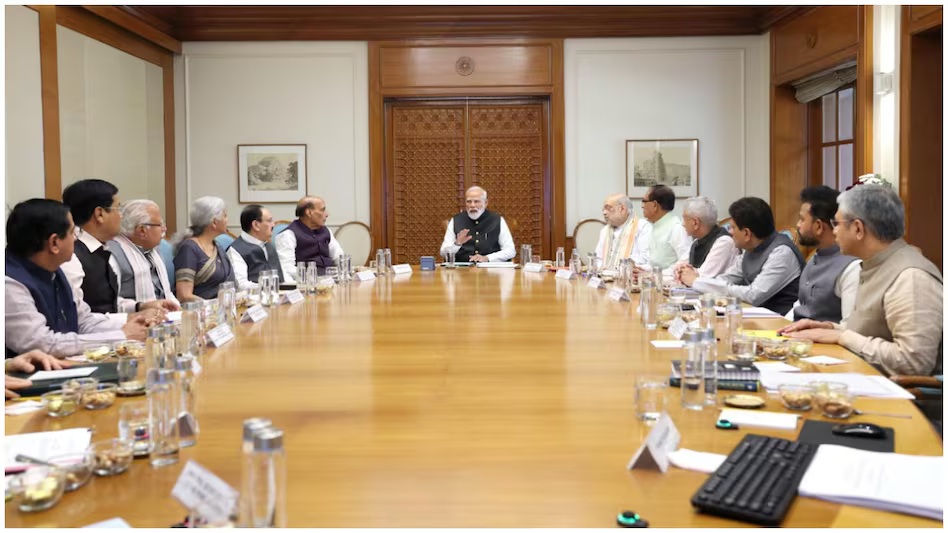
Prime Minister Modi presided over a high-level ministerial meeting regarding the Middle East crisis. (Photo: ITG)
Amidst the Middle East crisis, the government remains on high alert. During a high-level meeting held at the Prime Minister’s residence, the energy, petroleum, power, and fertilizer sectors were thoroughly reviewed. The situation is being continuously monitored to ensure the country’s energy security and to maintain the stability of supply systems.
New Delhi: Prime Minister Narendra Modi presided over a high-level meeting at his official residence, ‘7 Lok Kalyan Marg,’ on Sunday March 22, 2026 evening. Senior government ministers and officials were present at this meeting, during which the status of sectors related to petroleum, crude oil, gas, power, and fertilizers was reviewed in light of the prevailing situation in the Middle East. The primary objective of the meeting was to ensure the uninterrupted supply of all essential commodities—including oil, gas, and fertilizers—across the country.
Attendees at the meeting included Union Home Minister Amit Shah, Defence Minister Rajnath Singh, Agriculture Minister Shivraj Singh Chouhan, External Affairs Minister S. Jaishankar, Finance Minister Nirmala Sitharaman, Minister of Chemicals & Fertilizers and Health J.P. Nadda, Minister of Petroleum & Natural Gas Hardeep Singh Puri, and Minister of Labour & Employment Mansukh Mandaviya, among other senior ministers and officials.
Amidst the Middle East crisis, the government is already taking proactive measures to maintain an uninterrupted supply of oil, gas, and fertilizers. On March 12, Prime Minister Modi stated that the ongoing conflict in the Middle East has triggered a global energy crisis. He noted that this situation also serves as a test of the patience and prudence of the people of the country. PM Modi emphasized that this challenge must be confronted with peace, patience, and public awareness.
Efforts to Address Supply Chain Disruptions
Prime Minister Modi also clarified that his government is continuously working to resolve disruptions affecting global supply chains. He stated, “We are striving to ensure that the bottlenecks and disruptions within the supply chain are effectively resolved.” In this conflict, which began on February 28, the situation has deteriorated further following attacks on Iran by the United States and Israel. In retaliation, Iran has launched attacks against Israel and the Gulf nations.
The Strait of Hormuz—situated under Iran’s control—is a critically important maritime route through which approximately 20% of the world’s energy supply passes. Since the onset of the conflict, ship movement in this region has been significantly restricted. This has impacted the energy supplies of several nations, including India. To help manage the situation, Prime Minister Modi has held telephonic conversations with the leaders of Saudi Arabia, the UAE, Qatar, Bahrain, Kuwait, Jordan, France, Malaysia, Israel, and Iran.
Decline in Panic Bookings for LPG Cylinders
The government has taken significant measures to streamline the gas distribution system and alleviate the pressure currently being placed on supply networks. According to an official government statement, the supply of domestic LPG remains completely normal at this time. There are no instances of gas shortages (or “dry-outs”) reported anywhere across the country, and deliveries are proceeding as usual. The majority of deliveries are now being processed using a Delivery Authentication Code (DAC), and the volume of panic bookings has declined. On the commercial LPG front, the government has consistently increased allocations. Initially, 20 percent of the supply was restored.
Subsequently, on March 18—as part of reforms aimed at expanding PNG (Piped Natural Gas) coverage—an additional 10 percent allocation was approved. On March 21, following a further 20 percent increase, the total commercial LPG supply reached 50 percent of its capacity. Priority for this additional allocation has been accorded to restaurants, dhabas (roadside eateries), hotels, industrial canteens, food processing units, dairies, community kitchens, and government-subsidized food centers. Provisions have also been made to supply 5-kilogram LPG cylinders specifically for migrant workers.
New distribution guidelines have been implemented across approximately 20 states and Union Territories, while in the remaining regions, public sector oil companies continue to manage the supply operations. Over the past eight days, approximately 15,440 tons of LPG have been supplied to commercial consumers.
Simultaneously, the expansion of Piped Natural Gas (PNG) is also being actively promoted. States have been directed to expedite the provision of new PNG connections for both domestic and commercial consumers. The Petroleum and Explosives Safety Organization (PESO) has instructed all its offices to ensure that all application processes related to City Gas Distribution (CGD) are resolved within 10 days. The objective behind this initiative is to accelerate the expansion of Piped Natural Gas (PNG).
Strict Action Against Hoarding and Black Marketing
Continuous raids are being conducted across the country to curb the hoarding and black marketing of LPG. Operations at ports nationwide remain normal, and there are no instances of congestion anywhere. The government is closely monitoring developments in the Gulf and the Middle East, and the safety of Indians residing in these regions is being accorded the highest priority. Indian embassies located in the Gulf nations are maintaining constant contact with their citizens, providing them with all necessary information. Furthermore, a significant number of Indian citizens have been evacuated and repatriated from conflict zones.