Reg No. - CHHBIL/2010/41479ISSN - 2582-919X

Nepal Election Results LIVE: ‘Gen Z’ government in Nepal, Balen Shah wins big, veteran leaders including Oli in a bad shape
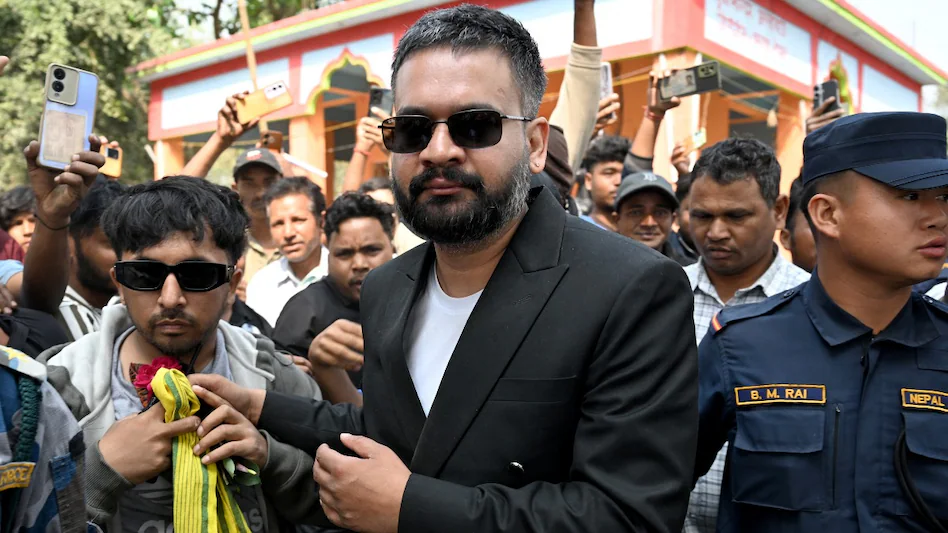
Balen Shah is the RSP candidate (File photo – AFP)
Nepal Election Result 2026 Live Updates: Early trends in Nepal’s general election indicate a shift in the political landscape. Balen Shah’s Rashtriya Swatantra Party appears to be challenging traditional parties with an early lead. With nearly 60% voter turnout, heavyweights like KP Sharma Oli and Gagan Thapa are also in the fray. Corruption and systemic change were major issues in the election.
Initial trends from the Nepal elections are starting to come in. A strong wave in favor of Balen Shah is visible. His Rashtriya Swatantra Party (RSP) is leading in the initial trends, while the older parties appear to be in dire straits.
Millions of people voted in Nepal on Thursday. These are the country’s first general elections since violent Gen-Z protests that toppled the coalition government led by KP Sharma Oli. Corruption is a major issue in this election.
India is closely monitoring the elections, hoping for a stable government in the politically unstable Himalayan country. Foreign Ministry spokesperson Randhir Jaiswal said, “We congratulate Prime Minister Sushila Karki, the government and the people of Nepal, as well as various stakeholders, for successfully conducting these elections despite the extraordinary circumstances of last year.”
According to news agency Reuters, voter turnout in Nepal was close to 60 percent. Nepal’s acting Chief Election Commissioner, Ram Prasad Bhandari, said that the House of Representatives elections were conducted peacefully and enthusiastically.
Live updates here…
- Balen Shah’s election as Prime Minister is considered almost certain. If initial trends translate into results, a single party will win a majority in Nepal after 36 years.
According to current information, counting is underway for 61 seats. Balen’s party has a strong lead in 52 of these seats. The Nepali Congress is leading in 5 seats and the UML in 4.
Meanwhile, Oli has also fallen behind in the initial trends. Several former Prime Ministers, several former Deputy Prime Ministers, and several ministers are lagging far behind in the vote count.
Rapper Balen Shah’s Wave
The new Rashtriya Swatantra Party (RSP), led by former rapper Balen Shah, who has also served as Mayor of Kathmandu, is posing a strong challenge to the two largest political parties – the Nepali Congress Party and the Communist Party of Nepal (Unified Marxist-Leninist).
The RSP, formed in 2022, has garnered considerable support during the election campaign, and Shah is considered a strong contender for the prime ministership. On the other hand, the Nepali Congress and CPN (UML) were part of the governments that were toppled by Gen-Z last year.
Gagan Thapa and Oli also in the fray
Nepali Congress President Gagan Thapa is his party’s prime ministerial candidate, while the CPN (UML) has nominated Oli as its prime ministerial candidate. Thapa is contesting from the Dhanusha-4 constituency.
Nepal has a total of 18.9 million voters. Voting is scheduled for a total of 275 seats. Voters will elect 165 members of the House of Representatives through First Past the Post (FPTP) or direct voting, and 110 members through the Proportional Representation (PR) system.
Approximately 3,400 candidates are contesting for 165 seats through direct voting, and 3,135 candidates are contesting for 110 seats through PR.
Balen Shah cast his vote from Garegaon in Kathmandu. He is contesting from Jhapa-5. Oli, the ousted Prime Minister, cast his vote from Balkot in Bhaktapur district.
The Ujyalo Nepal Party, led by Kulman Ghising, and the Shram Shakti Party, led by former Dharan Mayor Harka Sampang, are also contesting the elections, but have received support only in limited areas.
Following Oli’s removal from power, President Ramchandra Paudel dissolved the House of Representatives on September 12 and appointed Sushila Karki as acting Prime Minister.
The key issues raised by Gen-Z are anti-corruption campaigns, good governance, an end to nepotism, and generational change in political leadership.
A three-day holiday has been declared in Nepal for the elections starting Wednesday.
According to Election Commission data, there were a total of 10,967 polling booths and 23,112 polling stations. 65 political parties participated in the elections.
Nepal has seen 14 changes of government in the past 18 years, reflecting the fragile nature of the Himalayan nation’s political system

YOU MAY LIKE THIS